
On the Trail of Genetic Clues: The Revolution of DNA Analysis in Law Enforcement
Imagine a medieval investigator trying to find evidence at the scene of a murder — at best, they could rely on the testimony of an eyewitness or a dropped cloak button. Today, however, the perpetrator's identifier is hidden within a single hair or a single drop of blood, even if no one saw the offender. The history of law enforcement was transformed by a revolutionary leap brought by DNA analysis, which serves as a molecular fingerprint for every person. This technology not only puts cold-blooded killers behind bars, but is also capable of exonerating the innocent, while at the same time raising serious ethical questions about data protection and the limits of privacy. How did we get here, and where is the revolution of genetic clues in criminology heading? In what follows, we will examine the role of DNA analysis in law enforcement through historical and modern criminal cases, as well as broader societal reflections.
Killers Caught by DNA — from the First Case to the Present Day
The First Milestone: Solving a Double Murder
In 1986 in England, two young girls were murdered in Leicestershire. The police seemed helpless until the geneticist Alec Jeffreys offered a new method: DNA fingerprinting. Jeffreys had recently discovered that certain segments of human DNA produce a pattern that differs from individual to individual, so the person can be identified through a genetic profile. Until then, the technique had been used mainly for paternity tests, but now it was applied to a criminal case for the first time. The investigators compared the suspect's DNA with the samples found at the crime scene — and were astonished to find that the DNA of the 17-year-old in custody, Richard Buckland, did not match that of the killer. He became the first person exonerated of a criminal charge by DNA analysis. To find the real perpetrator, the police took an unprecedented step: they collected blood samples from more than 5,000 local men, hoping the murderer would be among them. In the end, the criminal was caught by a small slip — Colin Pitchfork sent his own friend to give a sample in his place, but the deception was uncovered, and his DNA showed a perfect match with the samples recovered from the murder scenes. Thus in 1987, Pitchfork became the first criminal convicted on the basis of DNA evidence, setting a precedent for future investigations.
DNA in the Detective's Pocket: Solving Modern "Cold Cases"
In the decades since, DNA testing has become the most reliable weapon of investigators. Countless unsolved crimes that had lain cold for decades in the depths of police files have been closed. In 2018, the American authorities arrested the notorious "Golden State Killer" serial murderer, who between 1974 and 1986 committed 13 murders and dozens of rapes in California. Joseph James DeAngelo, the "Golden State Killer," had hidden for decades, but modern science finally caught up with him: the DNA left at the crime scenes — as in earlier cases — brought him under suspicion, but what made this case truly extraordinary was the method of capture. The investigators did not find his profile in an existing criminal database, but came across his relatives in an online family-tree search genetic database. An investigator uploaded the unknown perpetrator's DNA profile to the open genealogy database called GEDmatch, where it showed partial matches with the genomes of several registered users. These turned out to be distant cousins — and by tracing back the family trees, the trail led to DeAngelo. This is how, purely by reconstructing family relationships, a killer who had been invisible for four decades was caught. Similar methods have since solved one old case after another: in 2021, for example, the perpetrator of a double murder committed in 1956 was identified, making it one of the oldest cases ever solved using genetic genealogy. DNA does not forget: whether we are dealing with decades-old traces or tiny pieces of evidence, with the right technique the crimes of the past can be brought back to the surface.
Exoneration of the Innocent and the Service of Justice
The power of DNA shows itself not only in punishing the guilty, but also in clearing the innocent. In the past it often happened that someone was convicted on the basis of false witness testimony or weak evidence, only for the DNA analysis of a preserved sample years later to reveal the truth. In 2017 in the United States, for example, a 71-year-old man was released after a modern DNA test clearly ruled out his involvement in the double murder for which he had been sentenced in 1978. The Innocence Project and other organizations have exonerated more than a hundred wrongly convicted people around the world through DNA evidence, demonstrating that this technology can save lives. At the same time, the opposite is also true: a matching DNA sample is not always decisive. In the 1995 O.J. Simpson trial, the prosecution presented strong DNA evidence in connection with the murders, yet an acquittal was returned, because doubts about the handling of the evidence were successfully raised before the jury. It can be seen that DNA does not by itself judge or decide — it must always be interpreted together with the context. Nevertheless, in the history of law enforcement, there is hardly any other tool that has so dramatically increased the accuracy of justice.
The Evolution of Genetic Technology: From Fingerprint to Profile, From Profile to Portrait?
From Analog Traces to DNA
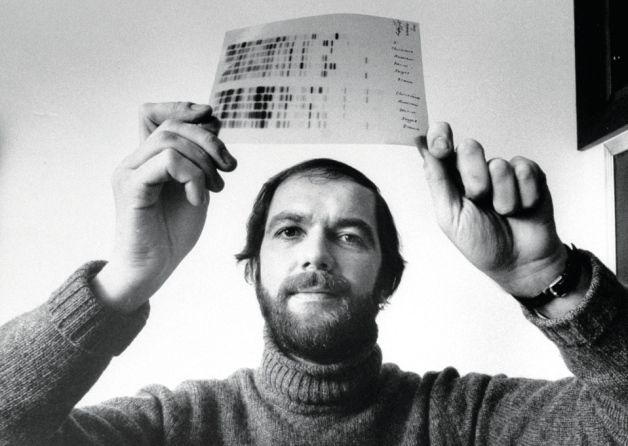
For a long time, criminology made do with fingerprints and blood-group identification. Fingerprints became a fundamental tool of investigation around 1900, but within our bodies there existed an even deeper identifying code, which remained beyond our reach until the end of the 20th century. After the discovery of the double helix structure of DNA — deoxyribonucleic acid — in 1953, several decades had to pass before we understood how this code could be used for personal identification. Alec Jeffreys worked out the basic principles of DNA profile creation in 1984: he identified repeating patterns at certain segments of the genome (so-called minisatellites, and later microsatellites) that vary from one individual to another. The first DNA analyses still required lengthy laboratory work: radioactively labeled DNA probes and X-ray film were used to visualize the band pattern on a laboratory gel. Nevertheless, the result exceeded all expectations — it turned out that a drop of blood or a single strand of hair was enough to determine, with near certainty, from whom it came. Within a few years, DNA analysis spread worldwide in police practice, and the rapid development of the technology had begun.
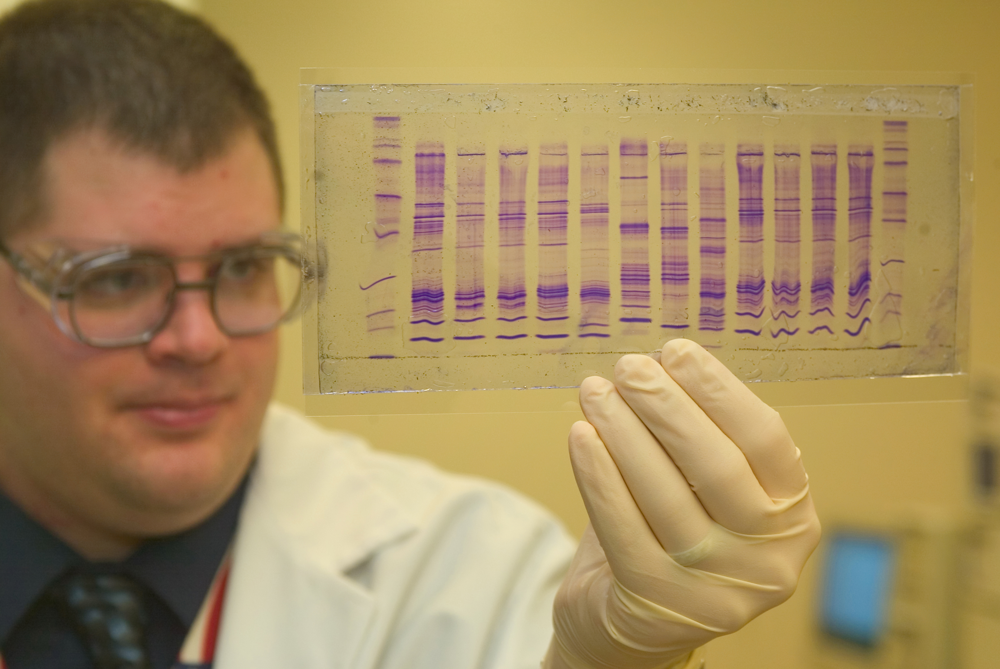
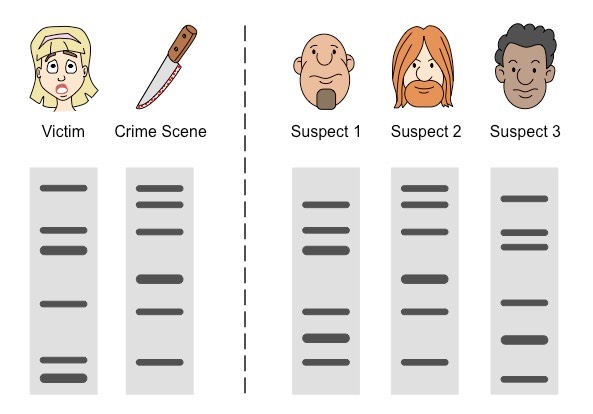
A forensic expert examines a DNA profile produced by electrophoresis. Such a banding pattern is unique to every person, and can be used in law enforcement as a genetic fingerprint.
Faster, More Sensitive, More Efficient Methods
By the 1990s, the early methods had been replaced by DNA amplification based on the polymerase chain reaction (PCR), which made it possible to extract the genetic profiles needed for identification even from the tiniest traces. Today, laboratories analyze short tandem repeats (STRs): an individual's genetic profile is built from 10–20 pre-selected DNA markers.
These markers do not code for any trait — they are, so to speak, the "silent" parts of the genome — but comparing them is like checking a barcode. If two samples match in every marker examined, a coincidental match is virtually ruled out. The process has become ever faster and more automated over the past decades: while in the 1990s it took days to produce a profile, today there are rapid tests available. In American law enforcement, for example, the Rapid DNA system has been introduced, with which a DNA profile can be obtained from a sample collected on-site in as little as 90 minutes.
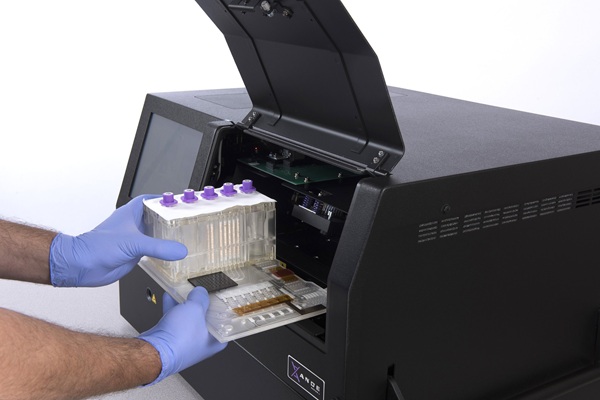
Rapid DNA system
By the time the suspect is brought in, the investigators may already know whether his DNA matches a trace recorded at the scene of an earlier crime. The miniaturization and acceleration of the technology suggests that in the near future even portable DNA analyzers may assist crime-scene officers, in real-time contact with the central databases.
Phenotype Determination: a Portrait from DNA?
DNA can be used not only to compare two samples; it also holds many features of a person's outward appearance. In recent years, the concept of forensic DNA phenotyping has emerged, meaning that crime laboratories try to read external traits from our genes. From the variations in certain genes, it is possible with a high degree of probability to infer, for example, eye and hair color, skin color, and even, in part, certain facial features.
If unknown DNA is found at a crime scene and does not appear in any database, the authorities may, as a last resort, turn to this method: what might the perpetrator look like? It is not yet used routinely anywhere in the world, but there has already been an example. In 2019 in Canada, in a case of sexual assault, the police published a computer-generated portrait created from the analysis of the perpetrator's DNA. The result was the face of a young man — but the police faced harsh criticism for this step.
Experts pointed out that such an image is only an estimate, and can easily lead to ethnic profiling or place innocent people under suspicion. A computer cannot predict a hairstyle, changes in the face due to body weight, or age, so the released composite image may be misleading.
DNA phenotyping is therefore exciting, but at present it is more of a scientific experiment than an established practice — yet in the future, if its accuracy improves, it may become a serious addition to the investigative toolkit. It is important to emphasize that this method is not intended for identification, but only to narrow down the circle of possible suspects.
As the technology advances, however, more and more questions arise about how far we may go in exploiting genetic information.
Criminal DNA Databases: the Network of Modern Investigation
As more and more criminals were successfully identified through DNA, it became clear that central registries were needed. The United Kingdom established its National DNA Database as early as 1995, into which the profile of every person arrested was initially entered. Similarly, the CODIS system was built up in the United States, linking a network of state and federal laboratories. Today, the world's largest criminal DNA database is the American National DNA Index: by the beginning of 2025, more than 25 million profiles (DNA samples of convicted criminals and suspects) had been entered into it, and it has already helped produce matches in more than 700,000 investigations.
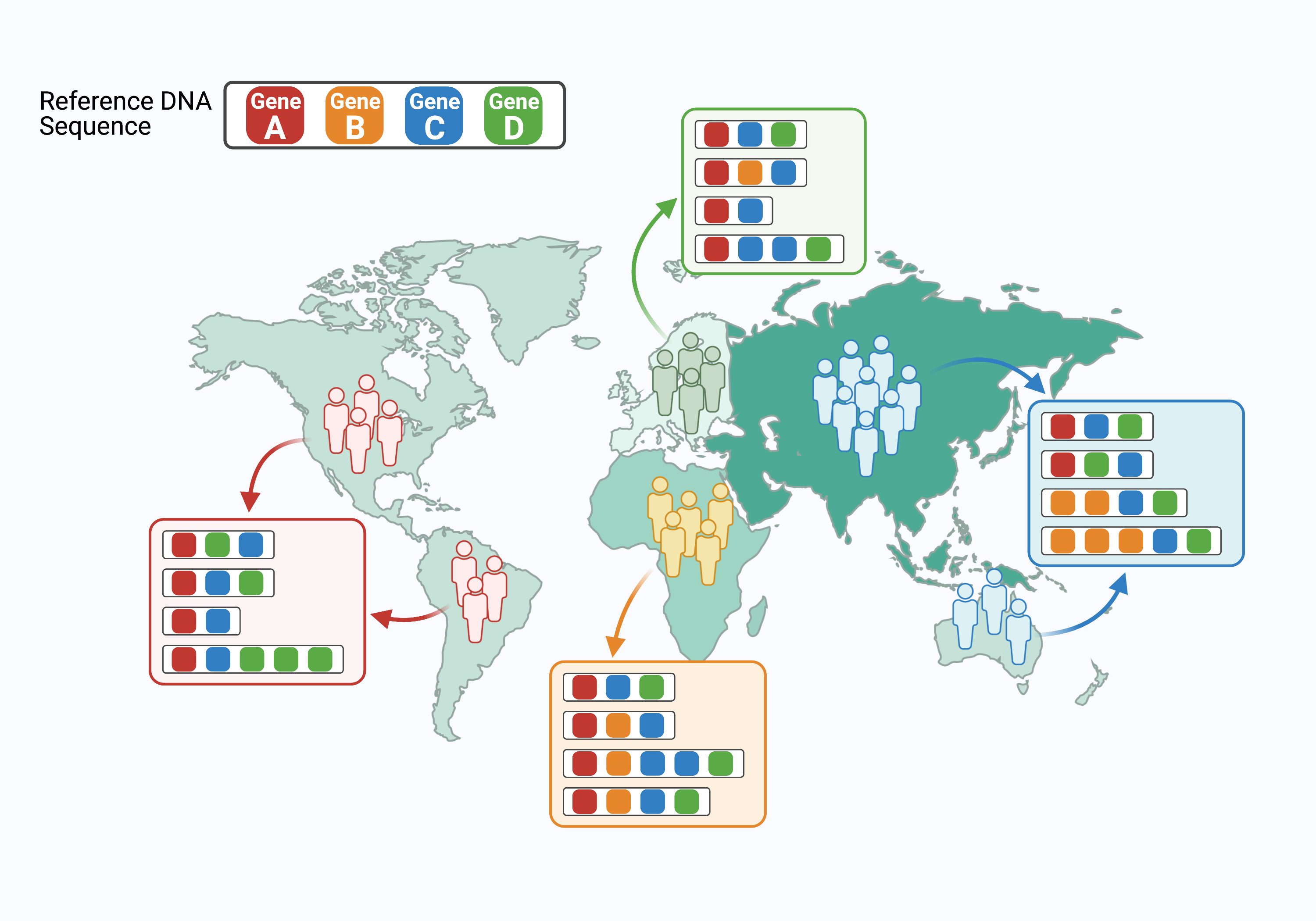
These matches often reveal connections that would otherwise have come to light by no other means — for instance, it may turn out that the perpetrator of two seemingly unrelated crimes is the same person, or that a serial offender is at work. The European countries maintain their DNA profile records separately, but Europol and Interpol cooperate ever more closely in solving cross-border cases. In Hungary too, thousands of DNA examinations are carried out in connection with criminal cases each year, and the national database connects to international information exchange when necessary. The effectiveness of DNA databases also depends on how broadly data is collected — and here we are already crossing into the sensitive territory of law and ethics.
Data Protection and Ethics: Where Are the Limits?
Our DNA carries the most personal information about us — no wonder the question arises: who may have access to it, and what may they use it for? From a law enforcement perspective, an extensive DNA database is a huge treasure, but this same treasure can also be dangerous if it falls into the wrong hands or is used in an excessive manner. In many countries, there is debate about from whom DNA samples may be stored. The storage of samples taken from offenders is generally accepted, but what about those who were taken into custody on suspicion and then released? A famous 2008 European court ruling stated that the United Kingdom's practice — under which the DNA of even innocent suspects who had been released was kept indefinitely — violated the right to privacy.
This case made it clear that genetic data protection had become part of the law: legislation now regulates how long and for what purpose such data may be stored. Today in Britain, for example, the profiles of those who have not been convicted are deleted from the database (with the exception of limited retention in cases of suspicion of certain serious crimes).
Voluntary Genetic Data and the Police.
In recent years, a data-protection dilemma has emerged from an unexpected direction: the world of recreational DNA tests. Millions of people send their saliva samples to companies to learn about their family tree or ethnic ancestry.
These enormous databases were not originally created for law-enforcement purposes, but the authorities have realized that they can be a gold mine for investigation. Since the Golden State Killer case, it has been a well-known fact that investigators can look into this data as well — in many cases without those who uploaded the samples even being aware of it.
Legally, this is a gray area: in 2018 GEDmatch modified its terms of use to warn users about the possibility of police access, and several larger companies have also cooperated with the authorities in solving certain serious crimes. In the United States, a heated debate is taking place over how ethical it is to make use, without consent, of the genetic information shared by unsuspecting people.
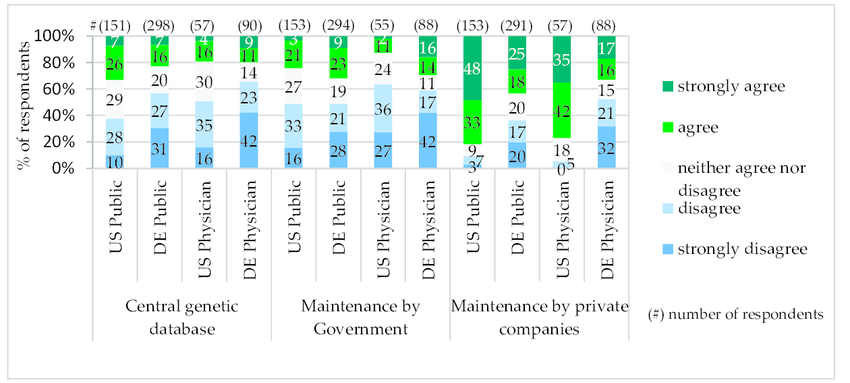
Public opinion currently tends to support such intervention only in the case of the most serious crimes (murders, violent offenses).
The question arises: can someone be considered to have given consent simply by uploading their DNA to a public database? After all, in doing so — unwillingly — they are making not only themselves but also their relatives "discoverable." In this way, a criminal can be unmasked through a distant cousin's test, even though he himself never gave a sample anywhere. The invisible web of privacy is in this way being increasingly drawn through society, and it is difficult to say where the community's legitimate need for security ends and the individual's right to anonymity begins.
The Specter of Total Surveillance.
A dystopian vision of the future arises: a totalitarian system that registers every citizen's DNA from birth. In such a world, there would be no perfect crime, since the smallest trace would immediately give anyone away — but there would also be no privacy. The authorities would know everything about us that our genes can reveal: not only our identity, but even our predispositions to disease or the secrets of our family ancestry. It sounds like science fiction, but the technology is already here, and it depends only on us what limits we build around it. This is also why the development of legal regulation in democratic countries is crucial. It must be regulated who can access the databases, in what cases, and how it can be ensured that the stored DNA profiles cannot be used for other purposes (e.g., workplace or insurance discrimination). Fortunately, more and more such laws are being passed around the world, but technology is developing faster than legislation — so we must constantly catch up with science through ethical guidance.
Data Leaks and Misuse — Real Dangers
When it comes to protecting DNA data, the risks are not limited to state overreach — cyberattacks and careless data handling are dangers as well. Just consider: if a criminal database were hacked and the profiles linked with other personal data, even criminals could misuse them (for example, to fabricate false evidence, or to extort people on the basis of their genetic information). Although the authorities protect these systems with serious security measures, nothing is invulnerable. It can also happen that law enforcement itself makes mistakes: if samples are mishandled in a laboratory, contamination can easily occur. The case of the "Phantom of Heilbronn" in Germany became infamous: for years, the DNA of an unknown woman was found at the scenes of countless crimes, ranging from robbery to murder — the authorities suspected a serial killer in the background. In the end it turned out that the mysterious profile actually belonged to an innocent factory worker, whose DNA had ended up on the cotton swabs used at the crime scenes as contamination.
Faulty sample collection thus sent the police chasing a criminal who did not exist, while real offenders perhaps got away. This case is a cautionary example showing that genetic evidence should be considered irrefutable only when every professional standard has been followed during collection and analysis. DNA does not lie — but if it is read incorrectly or becomes contaminated, it can be very misleading indeed.
Effectiveness and Limitations: a Miracle Weapon or a Double-Edged Sword?
The Power and Limits of DNA Tests. In court today, DNA evidence is often regarded as the gold standard. Not without reason: the statistical probability that two different people have exactly the same complete DNA profile is practically zero (with the exception of identical twins). In practice, this means that if the DNA of a bloodstain found at the scene of a crime matches the suspect's DNA at 20 markers, then it is almost certain that this person was there. The effectiveness of DNA tests is also shown by the fact that in many cases they can produce a result even where traditional traces fail — for example, with evidence that surfaces years later, or in cold cases. At the same time, it is important to emphasize that DNA is only one part of the chain of evidence. It must be determined when and how that biological trace ended up at the scene. It makes a great difference whether a strand of hair fell there on the night of a murder, or days earlier during an innocent visit. Without knowledge of the context, DNA can easily become over- or under-valued evidence.
Cunning Criminals and Challenges
As the police rely more and more on DNA, experienced criminals also try to keep up — sometimes by grotesque means. There are reports of cases in which the perpetrator deliberately tries to leave someone else's DNA at the scene in order to mislead the investigation (for example, by scattering a few stray strands of hair). Some have committed burglaries in sterile overalls and hairnets, so that not a single fragment of skin or hair would be left behind. In reality, however, it is almost impossible not to leave any trace — a touch, a breath, anything can carry cells. Moreover, maintaining "DNA hygiene" is difficult: most criminals slip up sooner or later, sweat from nervousness, or become careless, and the evidence is there. The greater problem usually lies elsewhere — in the technical limitations. For example, if a sample contains very little starting DNA (e.g., only a few cells ended up on a swab), the laboratory result may be incomplete or uncertain. In such cases, the partial profile obtained may fit several people, and does not provide 100% certainty. It is the responsibility of the experts to properly communicate the statistical weight of the results to the police and the court — unfortunately, in the past there have been examples where, in the eyes of the jury, on hearing "DNA match" all other evidence was pushed into the background, even though the degree of match was not convincing.
The Future: Will Every Trace Speak?
In light of the technology's development, the question rightly arises: can we reach a point at which no criminal can escape being brought to justice? If a tiny cell residue is enough, and we could find a matching profile in any database in the world, the days of anonymous offenders would be numbered. According to a 2018 scientific study, it is enough for 2–5% of a population's DNA data to be available in a public database — with that, we would practically have a trail to everyone's relatives, and so could indirectly identify anyone.
If this many people in a society have a genetic test done, from that point on an unknown DNA sample found at a crime scene could routinely lead to the perpetrator within a few hours through a database search and family-tree analysis.
This vision of the future is not even technically that distant — the question is whether we will accept it socially. It may be that in a few decades DNA registration will become a given (even at birth), and crime prevention will gain an unprecedented set of tools. It may also happen, however, that people will protest against such an extent of surveillance, and limit the authorities' access.
What is certain is this: DNA analysis is a double-edged sword. On the one hand, it is an exciting and effective weapon in the hands of law enforcement, one that has saved many lives and served justice — think of the solved cold cases, the serial killers put behind bars, or the people who sat innocently in prison until DNA set them free. On the other hand, the misuse of genetic data and the challenges of data protection have opened a new chapter in the history of law and society. Humanity has always longed to search for the truth — from cave paintings through great libraries to computer databases — and now our own genes tell our stories. DNA is one of the myth-creating elements of the modern age: at once the promise of ultimate certainty and the touchstone of personal freedom. The society of the future will be measured by how it finds the balance between security and freedom, between the effectiveness of the justice system and respect for individual rights, in this new genetic detective novel that we are all writing together.
Sources:
- Blore, J. — 10 Cold Cases Solved. Forensics Colleges
- Index Tudomány — A DNS halálra ítélhet és életet menthet. (2012)
- National Library of Medicine — Alec Jeffreys and the Pitchfork case.
- Qubit.hu — Az örökítőanyagod akkor is árulkodik rólad… (2018)
- NPR — 60-Year-Old Cold Case Solved (2021)
- FBI CODIS — NDIS Statistics (2025)
- Nogel, M. (2022) — A kriminalisztikai DNS-fenotipizálás kihívásai.
- Vice News — Police Are Using DNA to Generate 3D Images... (2022)
- European Court of Human Rights — S. and Marper v UK (2008)
- Qubit.hu — Genetikai adatok és bűnüldözés etikája (2018)
- Wikipedia — Phantom of Heilbronn
- Policing Project — Rapid DNA (2021)